Sound therapy · Vancouver

An hour where your system finally gets to switch off

A sound bath is an hour of sustained tone: Tibetan and crystal singing bowls, chimes, and low frequencies you feel more than hear. You lie down and listen, and the sound does the work. No effort required, and nothing you have to arrive believing.

Private 1:1 — $210 · first session, 60–90 min. There's also a monthly group session at $45 if you'd rather start there.

Dr. José Peralta seated with a Tibetan singing bowl, surrounded by his set of bowls
Dr. José Peralta playing a Tibetan singing bowl over a patient lying on a treatment table, in a room set up for sound sessions

What happens in a session

What actually happens in a 1:1 sound therapy session

First we talk for a few minutes — what's going on, what you want the hour to focus on. Then you lie down on the treatment table. You stay fully clothed. There's a blanket if you want one, and an eye pillow if that helps you settle.

Then I play. Tibetan bowls, crystal bowls, chimes — sustained tones that overlap and shift, for about an hour. Some of it happens around you; some of the time I'll place singing bowls directly on different parts of your body, so you feel the vibration travel through you rather than just hearing it. If you're open to it, I'll sometimes add acupuncture during the session too — it tends to amplify the effect on the nervous system and deepen the results.

Some people stay alert the whole time. Plenty fall asleep. Both are fine. There is no wrong way to do this.

Afterwards, we talk again — what I noticed in how the sound landed and shifted, what you felt. That's what tells us where to go next, and if you're already working with me on the naturopathic side, how this fits into that plan. Most people notice the rest of the day feels different too — slower, quieter, like something's been turned down a notch or two. Some tell me it carries into the next day.

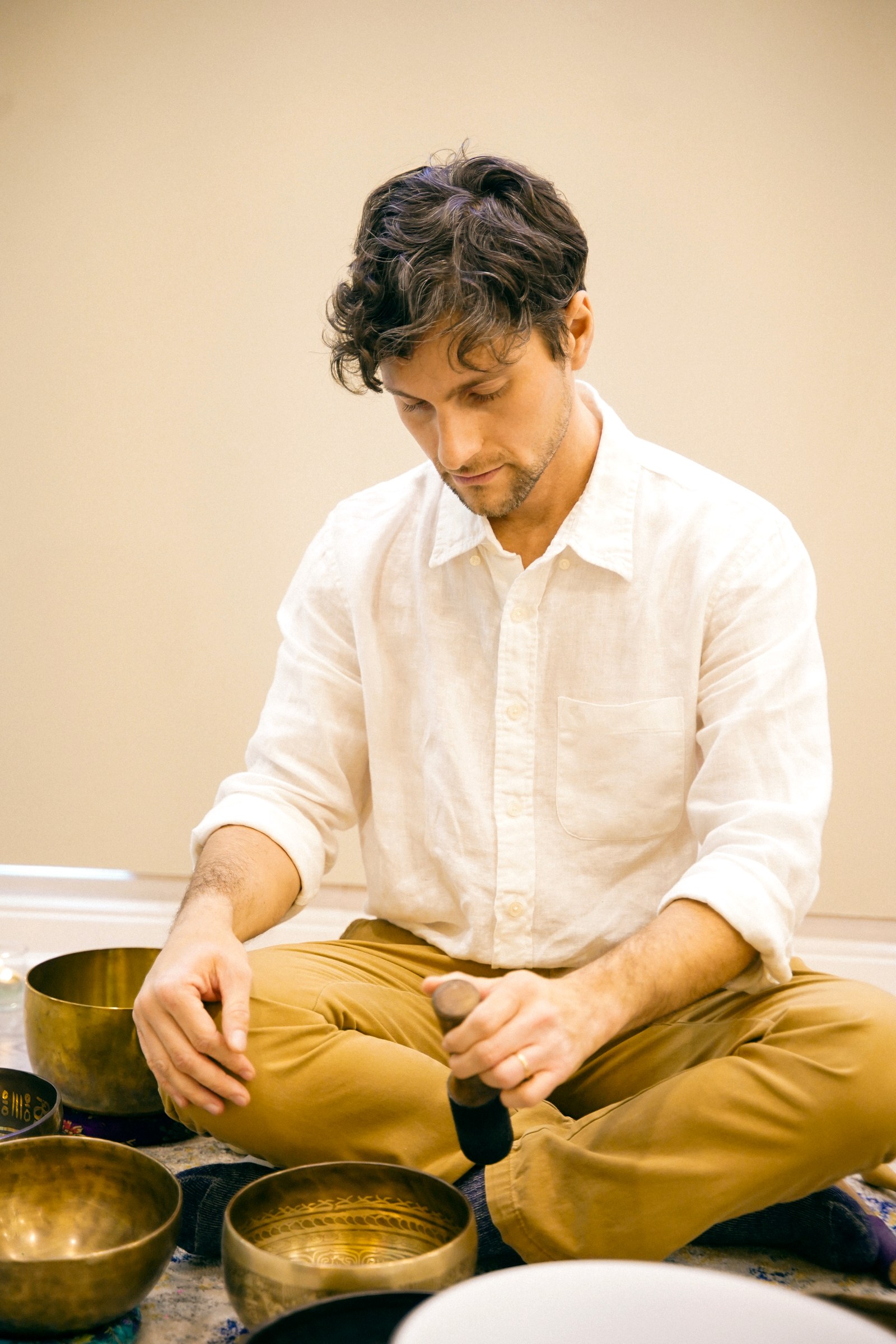
Dr. José Peralta seated with a Tibetan singing bowl, playing it with a mallet

Why a physician does this

Working with the nervous system, directly

I'm a naturopathic physician, originally trained as a family doctor. Of everything I was taught, this is the tool I keep coming back to. In my experience it is the most direct way I have to help a system that will not come down on its own.

Most people I see have been under real stress for a long time — long enough that thinking it through, or even sleeping it off, has stopped being enough on its own. Sound doesn't ask anything of the mind. It just gives the system something steady to settle against.

Some would call this the energetic layer of the work, and I think that's fair. A nervous system runs on electrical signals; breath, heart rhythm and muscle tone all move with it. Older traditions described something similar long before there were instruments to measure it — Qi, vital energy, by whatever name. I've never felt those two languages were in conflict.

That's not the only layer people find in it. For many people, the hour becomes something more than a physiological reset — meaningful in a way that's hard to put into words, and that's a real part of the work too, not separate from it. I don't try to explain it away, and I don't need you to explain it to me either. What I focus on is making sure what's happening in your nervous system is sound, so whatever else the hour brings you has something solid underneath it.

Once the system settles, the rest of the work — nutrition, botanicals, sleep — tends to land better. That is why I use it as part of naturopathic care rather than on its own.

I studied sound therapy in Argentina and in Nepal — the longer version of how that happened is on the about page.

Three ways to do this

Three ways to book

Group sound bath

$45 · 1 hour

Once a month, in a candlelit room with a wider set of instruments — bowls, chimes and more, filling the space together. You're welcome on your own, or with someone.

Ask about the next date →

Corporate & team

On request

On site or at the studio, for teams that have been running hot for a while.

Send an enquiry →

Book a session

Same session, either location

The private session runs the same way at both clinics. Choose whichever is easier for you to get to.

East Vancouver

Empower Health

Address
#208–2555 Commercial Dr., Vancouver, BC V5N 4C1
I'm in
Wednesdays, Thursdays & Saturdays
Wed & Thu 11am – 7pm · Sat 8:30 – 11am
Private session
$210 · first session, 60–90 min
Book at East Vancouver

Opens Mindbody in a new tab to complete your booking

Get directions

Prefer the monthly group session? It runs at $45 · 1 hour — ask when you book.

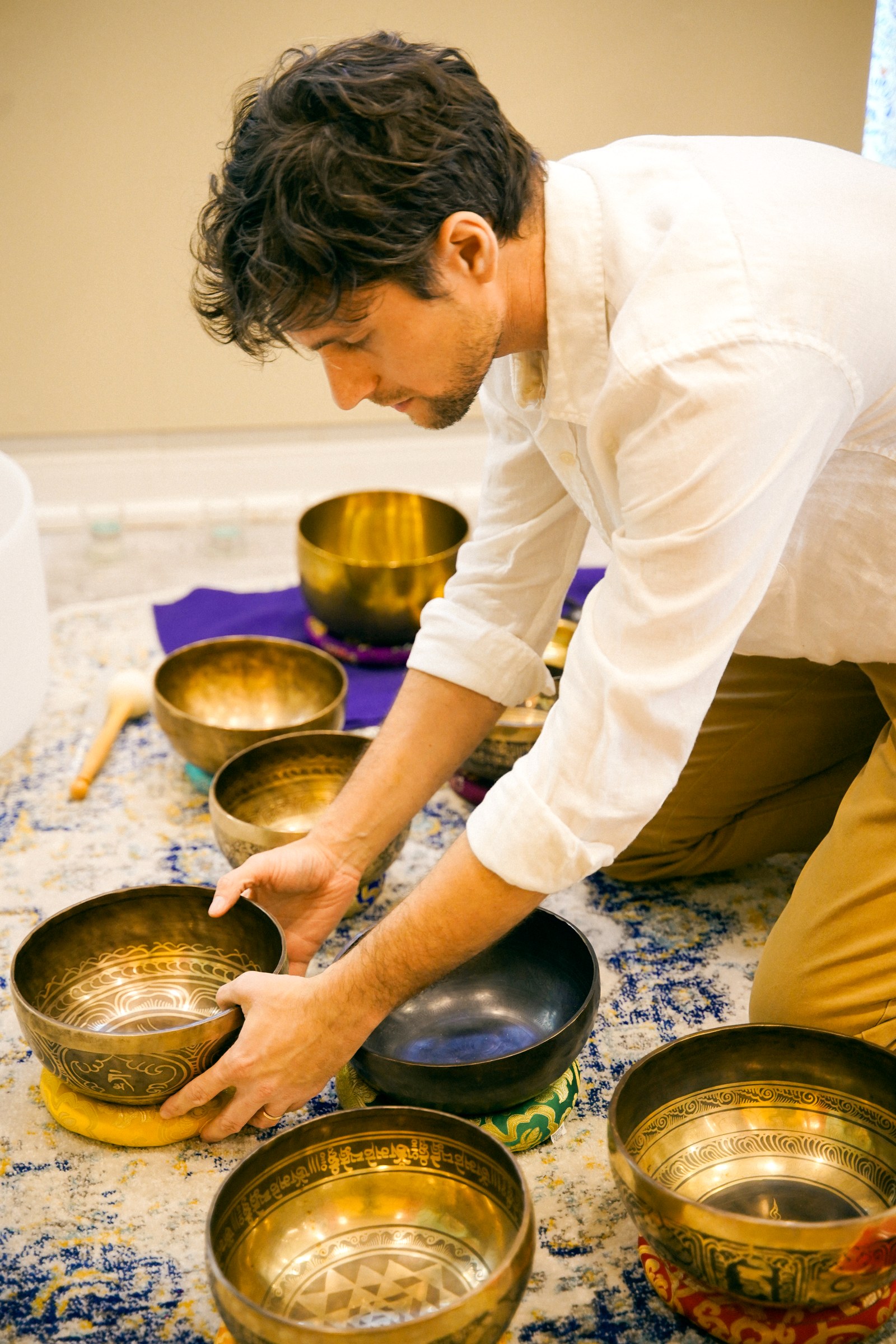
Dr. José Peralta arranging a row of Tibetan singing bowls before a session

Questions

What people ask before their first one

What do I bring?

Nothing. Wear something you can lie down comfortably in.

What if I fall asleep?

Then you probably needed it. It happens often, and your nervous system still gets the session.

Do I have to believe in anything?

No. You lie down and listen, and the physiological part happens either way. For a lot of people the hour becomes something more than that, and I don't try to explain it away — it's a real part of the work, not something separate from it.

Is this a spiritual practice?

It can be, and for many people it is. What I can speak to as a physician is the nervous system part, and I make sure that part is done well — so whatever else the hour brings you has something solid underneath it. People arrive with all sorts of beliefs and I've never needed to know what they are.

Is it loud?

It's fuller than it is loud. If you're sound-sensitive, tell me before we start and I'll place you further from the bowls.

Can I come if I am pregnant?

Yes. Let me know when you book: I won't rest bowls over your abdomen or chest, and the rest of the session runs as usual. If you have any concerns, it's worth checking with whoever looks after your maternity care first.

Could it make me feel worse?

For most people the hour is uneventful. A small number get a headache, or find an emotion arrives without much warning. Some people feel an old injury again for a while — pain that had been quiet. It's usually mild and it usually passes. You can ask me to turn it down, or stop at any point, and you don't have to explain why.

Is there anyone who should check with me first?

A few things are worth mentioning before you book rather than after: epilepsy or a history of seizures, a pacemaker or an implanted device, tinnitus or migraine, or a history where intense sensory experiences have been difficult for you. None of these is automatically a no. They change how I run the hour — which bowls I use, where I place them, how long and how loud. If you're pregnant it isn't a reason to stay away either; I simply won't rest bowls over your abdomen or chest. If you'd rather ask before booking anything, the 15-minute call is free.

Do I need experience with meditation?

None. There's nothing to do and nothing to get right.

Sound settles the system. Something else is winding it up

For a lot of people, one hour is enough — they come once a month and that's the whole arrangement. But if the tension is back within a few days, that's worth paying attention to: it usually means something upstream is holding it there. Sleep, digestion, nutrition, the overall load you're carrying.

You can keep resetting it, and there's nothing wrong with that. Or we can go look at what keeps switching it back on.

Book a sound session